
The Ecomuseo della Montagna Pistoiese: Ice Houses, Ironworks and a Mountain That Worked
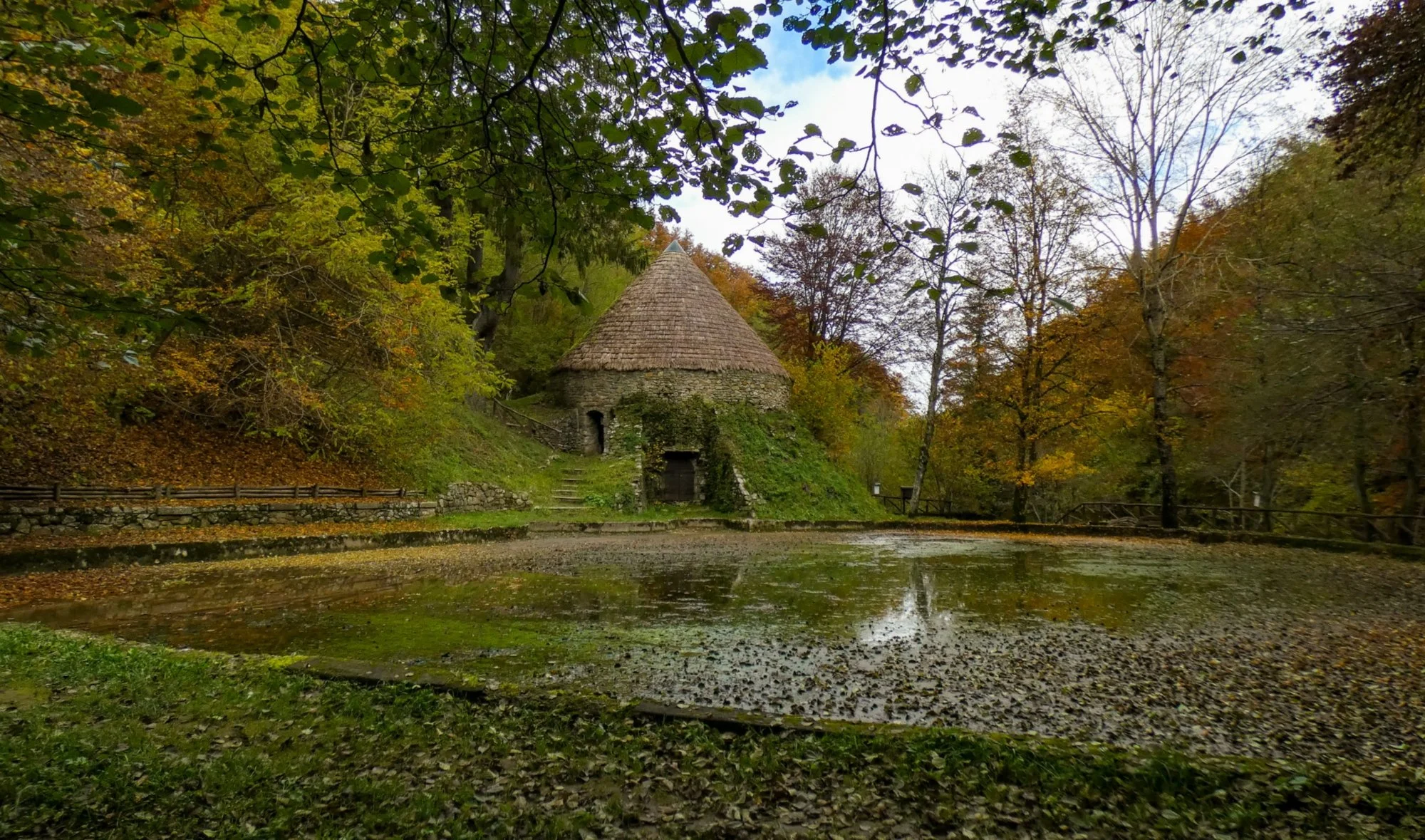
Before refrigerators, ice was a commodity. In the Reno valley above Pistoia, from the late 18th century to the first decades of the 20th, water was frozen on purpose. Weirs, channels and shallow basins put the winter cold to work. The slabs then went into big cone-shaped ice houses roofed with straw, the ghiacciaie. The Ecomuseo della Montagna Pistoiese tells the story of that trade and five other strands of local history, from Medici ironworks to chestnut flour. It isn't a museum with a door and a ticket desk. It's six open-air itineraries, with museums, study centres and surviving structures spread across a mountain that starts twenty minutes by car from Villa Agnolaccio.
A museum without walls
The Ecomuseo holds together six themed itineraries: ice, iron, sacred art, daily life, nature and stone. Each has its own sites, paths and opening times, spread across the towns of the Pistoia mountains.
The model was influential. Hugues de Varine, one of the scholars who defined the idea of an ecomuseum, traces the history of Italian ecomuseums back to this one, created from 1990 onwards. The information point is at Gavinana, in Palazzo Achilli, restored by the Province of Pistoia in 2005.
The ice houses of the Reno valley
The Ghiacciaia della Madonnina, on the Modenese state road at Le Piastre, is the most recognisable piece of the ice itinerary. It has a truncated cone shape and a straw roof, and it stored the natural ice produced with the water of the Reno. The system used weirs, sluices and millraces, plus the hard cold of an Apennine winter.
In 2026 the ice house opens from 27 June to 6 September, Friday to Sunday, 15:30 to 18:30, with the guide waiting on site. On Sunday 2 August it also opens from 10:00 to 13:00, during the Italian Lying Championship, which is held at Le Piastre. In bad weather it stays shut.
The ice study centre at Pracchia, which holds tools and scale models, is closed for refurbishment. The Sentiero della Ghiacciaia is open all year, though: about 9 km with bilingual signs, from Le Piastre to Pontepetri. You can walk it on your own or with an environmental hiking guide, but not during a weather alert.
The Medici ironworks
The second itinerary starts with a political decision. Thanks to Cosimo I de' Medici, from 1543 the Pistoia mountains became the first iron-working district of the Grand Duchy of Tuscany. The ore came from the island of Elba, while water and woodland supplied power and charcoal on the spot.
The Antica Ferriera Papini, at Maresca, is documented as already working in 1388 and is one of the oldest in Tuscany. Inside are the original hydraulic and mechanical machines and an ingenious system for producing compressed air. During visits a local blacksmith lets people try beating iron at the forge. In 2026 it opens from 27 June to 6 September, Friday to Sunday, 15:30 to 18:30.
At Pontepetri, the Museo del Ferro has been open since 1999, with the Renewable Energy Garden beside it. Here the water of the Maresca stream, diverted through channels and sluices, turns two full-scale wooden wheels. One is horizontal, a mill wheel, and turns a millstone; the other is vertical and drives a tilt hammer. In 2026 the museum opens on the same days, 10:00 to 13:00.
The Sentiero della Ferriera also starts from the garden, six hundred metres along the river to the water intake. The millrace beside it once fed the 18th-century Pontepetri ironworks, demolished in 1978.
Chestnuts, wool and charcoal
The daily-life itinerary is the one that changes most with the seasons. At Orsigna the chestnut harvest work begins in October. The nuts go to the metato, a drying house where they sit over a slow fire for forty days. Then they go to the Molino di Giamba, where water-driven millstones turn them into sweet flour. From late October to early December you can gather chestnuts in the teaching grove and watch each stage of the work.
For the rest of the year the metato stays open and you can sit inside it. Walking down along the Orsigna stream you cross two wooden bridges built to a design by Leonardo da Vinci and reach the mill, which is set working for visitors. A little further on, the Via del Carbone keeps the charcoal burner's shelter, a hut of branches, leaves and earth, with a reconstructed charcoal pile.
At Rivoreta, the Museo della Gente dell'Appennino Pistoiese collects working objects, images and sounds. There's a toy workshop for children and a wool section, set up in a restored metato with an early-20th-century loom. In 2026 it opens from 27 June to 6 September, Friday to Sunday, 15:30 to 18:30, plus the morning of Sunday 26 July for its Living Museum day.
The rest of the Ecomuseo
The nature itinerary leads to the Orto Botanico Forestale di Abetone, in the upper Sestaione valley. Mountain flowers, carnivorous and medicinal plants grow here, and Norway spruce survives as a relic of the last ice age. In 2026 it opens from 27 June to 6 September, Tuesday to Sunday, 9:30-12:30 and 15:00-18:00, with guided tours at set times. At Gavinana, the MuNAP, redisplayed in 2018, covers the natural history and archaeology of the Apennines.
Sacred art centres on the parish church of Popiglio, enriched in the 16th and 17th centuries by votive gifts from the Vannini, a Popiglio family living in Rome. There are paintings by Sebastiano Vini and Giacinto Gimignani, the favourite painter of Pope Clement IX, and an organ built by the papal organ-maker Giuseppe Testa. The 2026 openings are few and fall between 4 July and 16 August.
The stone itinerary follows the medieval Via Francesca della Sambuca from Pavana to Sambuca Castello, past houses that carry masks carved in stone. Along the way is the medieval settlement of Glozano, in the Acquerino reserve. There are also the remains of the 10th-century Pieve di Furfalo, reached by a path through the woods.
Two pieces of engineering complete the picture. The Ponte Sospeso at Mammiano is 227 metres of steel cable, opened in 1923 to reach the S.M.I. factories. The Porrettana railway, the first line across the Apennines, opened in 1864 with 48 tunnels in 99 km.
Practical information
Distances from Villa Agnolaccio: Le Piastre 18 km (23 minutes), Pontepetri 24 km (29), Maresca 28 km (36), Gavinana 30 km (39), Orsigna 32 km (44), Mammiano Basso 34 km (46), Popiglio 39 km (50), Rivoreta 49 km (65), the Abetone botanical garden 53 km (70).
2026 season: nearly all sites open from 27 June to 6 September, Friday to Sunday. Outside that period they can be visited by arrangement, on the free phone line 800 974102, which answers every day.
Open out of season: the Ghiacciaia and Ferriera paths, the Pieve di Furfalo and, from late October, the chestnut work at Orsigna.
Tickets: the price list is published on the Ecomuseo site, which also carries the current hours. The information point at Palazzo Achilli, in Gavinana, answers on 0573 638025.
Combine it with: the same Reno valley leads to Porretta Terme, while higher up are Abetone and Corno alle Scale.
Villa Agnolaccio, at the foot of the mountain
Villa Agnolaccio sits on the hills 3 km from the centre of Pistoia, and the first stop of the Ecomuseo, Le Piastre, is twenty-three minutes away by car. That changes how you can plan a day. You can drive up in the morning, visit an ice house or an ironworks, and be back for lunch in the garden. For a full day you can carry on towards Gavinana, Orsigna or Abetone, with the road climbing bend after bend. For a longer stay, our early-18th-century villa puts the mountains and the art cities at the same easy distance.