
Padule di Fucecchio: A Complete Guide to Italy's Largest Inland Marsh
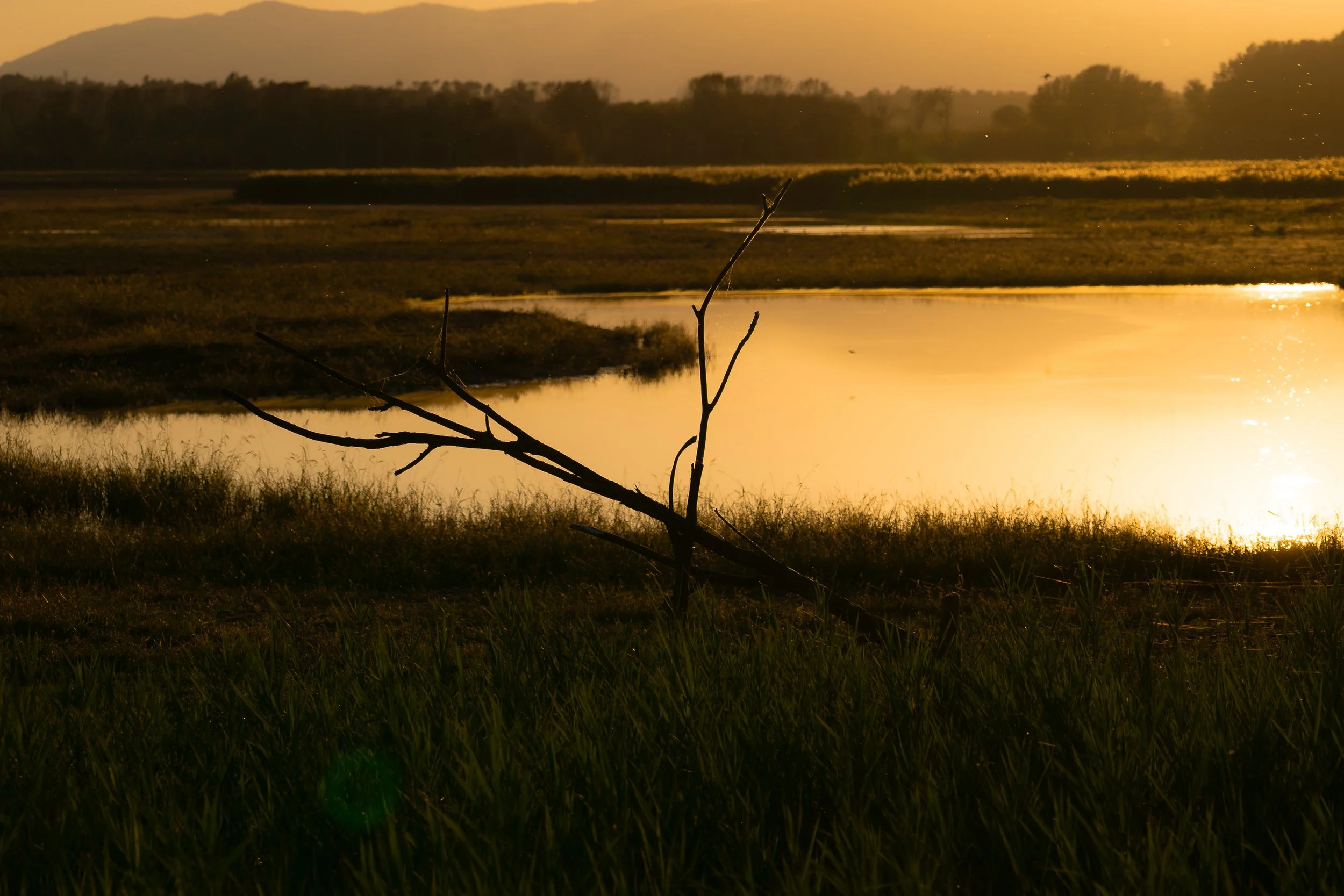
Photo by Stefano Gabryel, naturalist photographer and hiking guide in Tuscany. Guests of Villa Agnolaccio enjoy an exclusive 10% discount on his guided excursions.
The Padule di Fucecchio is one of those places that surprises first-time visitors — and never disappoints those who return. Stretching across more than 2,400 hectares between the provinces of Pistoia and Florence, from the Valdinievole valley to the slopes of Montalbano, it is the largest inland marsh in the Italian peninsula. A world unto itself, silent and wild, just a few kilometres from Pistoia and Montecatini Terme.
What Is the Padule di Fucecchio?
The marsh formed over millennia as a result of the gradual rise of the Arno riverbed, which prevents the natural drainage of the Valdinievole basin. Several waterways — including the Pescia di Pescia, the Nievole and the Vincio — flow into this natural hollow, creating an extraordinary mosaic of open water, reed beds, wet meadows, poplar groves and lowland woodland.
The Padule di Fucecchio Regional Nature Reserve was established in 1996 to protect the most ecologically valuable part of this ecosystem. Since 2024 it has been part of the LIPU Oases and Reserves network — a further recognition of its national importance for wildlife conservation.
A Paradise for Birdwatchers
The Padule di Fucecchio is one of Italy's most important ornithological sites. More than 240 bird species have been recorded in the area over the course of a year — a number that alone justifies the visit for anyone interested in birdwatching or nature photography.
In spring the reserve comes alive with migration: herons of seven different species — including night herons, little egrets and purple herons — form the famous Garzaia, the largest nesting colony in central and southern Italy. The white stork is a year-round presence, with the largest breeding population in Tuscany (7 nesting pairs). In winter, the marsh is dominated by ducks, especially the teal, which finds here one of its most important wintering populations in the region.
Species to look out for include: the crane, the black stork, the marsh harrier, the mallard, and the black-winged stilt.
What to Do at the Padule di Fucecchio
Guided Birdwatching
The Nature Reserve Visitor Centre, located in Castelmartini in the municipality of Larciano, organises guided excursions with access to the birdwatching hides — the casotti — positioned at strategic points across the reserve. Booking in advance is recommended, particularly during the spring migration period.
The Le Morette Nature Trail
The main nature trail starts from Castelmartini and allows visitors to explore the heart of the reserve on foot or by bicycle. The route is flat and accessible, immersed in nature, with observation posts along the way.
The Padule Ring Route (20 km)
For a longer excursion, the full loop around the marsh covers approximately 20 kilometres along unpaved tracks, embankments and short stretches of road. The starting point is the Dogana del Capannone, a historic building dating back to the 1500s and now home to a documentation centre on the Padule di Fucecchio Massacre of 1944.
Traditional Flat-Bottomed Boats
The most evocative way to experience the marsh: the traditional flat-bottomed barchine, historically used by hunters, allow you to glide silently between the reed beds and open water in complete stillness. Available with local operators, particularly in the warmer months, departing from the Casotto del Sordo in Massarella.
Nature Photography
Sunsets reflected in mirror-still water, herons motionless among the reeds, morning mist rolling across the marsh: this is one of the most photogenic landscapes in Tuscany, in any season.
When to Visit the Padule di Fucecchio
The marsh is beautiful in every season, but each period has its own character.
Spring (April–May): peak birdwatching season. Migration brings thousands of waterfowl and the Garzaia colony is in full activity.
Summer: quieter, ideal for boat excursions through the reed beds.
Autumn: the first winter migrants arrive, and the poplar groves turn golden.
Winter: large concentrations of wildfowl. The marsh reaches its highest water levels and is particularly atmospheric.
How to Get There
The Castelmartini Visitor Centre (Larciano, PT) is the main access point to the reserve. It is approximately 20 minutes from Pistoia by car and under 30 minutes from the Montecatini motorway exit on the A11 Florence–Sea motorway. Those arriving from Fucecchio can use the alternative starting point at the Casotto del Sordo in Massarella.
Villa Agnolaccio: The Perfect Base for Visiting the Padule di Fucecchio
Just 20–25 minutes by car from Villa Agnolaccio, the Padule di Fucecchio makes a perfect morning excursion into wild nature — easily combined with a day in Pistoia, a visit to the Montecatini thermal spas, or a walk in the Pistoia hills. Our villa is the ideal base for those who want to explore this still-authentic, uncrowded corner of Tuscany.
Thinking of planning a visit? Get in touch — we'll help you put together the perfect stay.