
Corno alle Scale: Skiing in Winter, Hiking in Summer
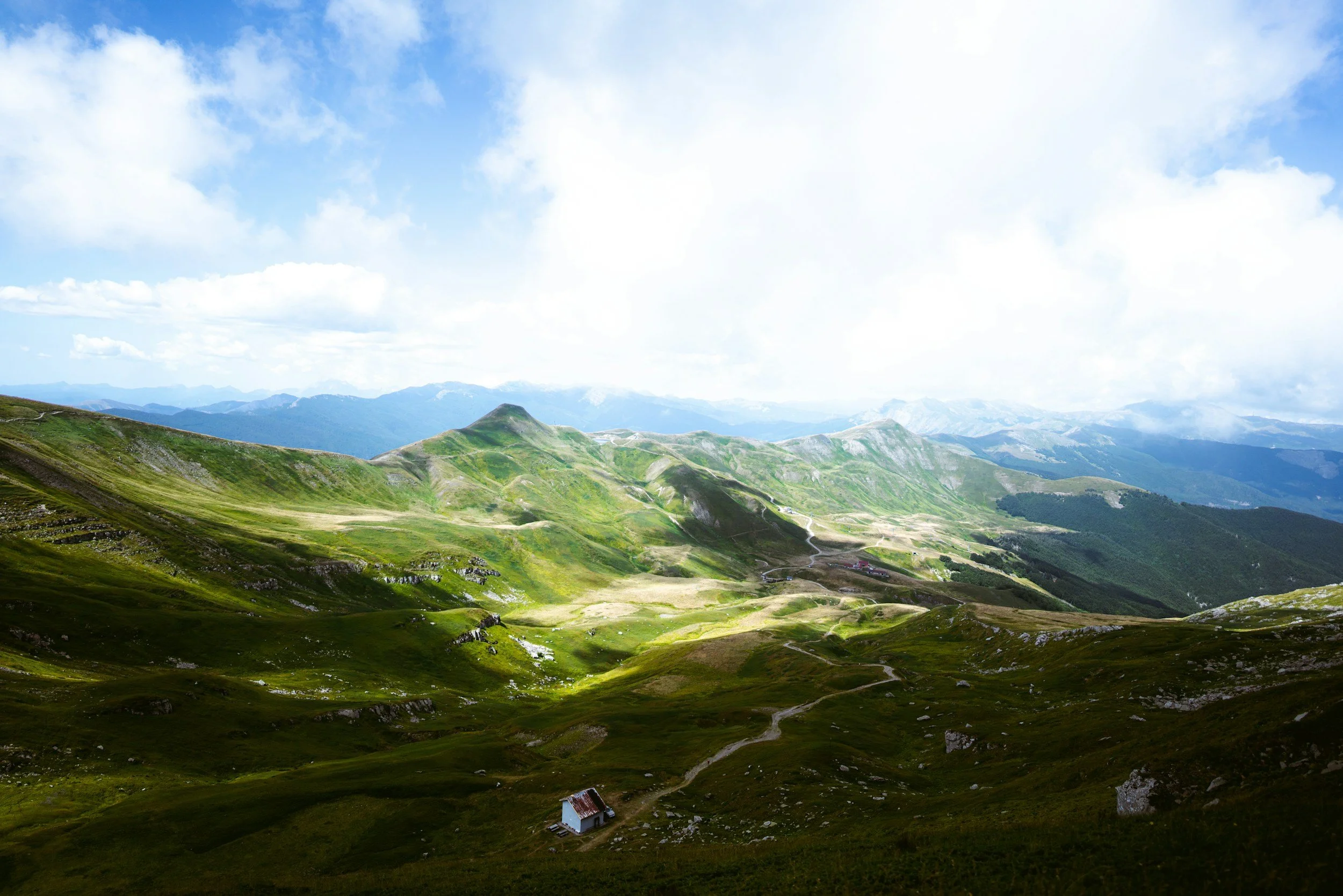
Just beyond the ridge that separates Tuscany from Emilia rises Corno alle Scale, the highest peak of the Bolognese Apennines: 1,945 metres, its north face formed of rocky ledges arranged like a staircase — which is where the mountain's curious name comes from. Its southern slope looks towards the province of Pistoia and its waters drain into the Serchio: we are, quite literally, astride two regions. It is a mountain with two lives: a ski resort in winter, a hiker's paradise the rest of the year — all within a Regional Park established in 1988.
In Winter: The Ski Resort
The resort spreads out above Vidiciatico, in the Cavone bowl, with around fifteen kilometres of pistes served by chairlifts and carpet lifts, and snowmaking across much of the terrain. It is a family-friendly resort: beginner areas, a snow baby park, ski schools and runs for every level.
But Corno has one extra claim to fame. It was here that a very young Alberto Tomba took his first turns on skis: two runs bear his name — Tomba 1 and Tomba 2 — and they are among the longest in the whole Apennines. For snowboarders there is the Le Malghe terrain park, and the area around the pistes is ideal for snowshoeing and ski touring.
A day pass costs roughly €28 on weekdays to €38 on holidays, with half-day options. The season generally runs from mid-December to late March, snow permitting: it is best to check the lift status on the official website before you go.
In Summer: One of the Finest Balconies in the Apennines
When the snow melts, Corno alle Scale becomes a vast playground for walkers. In the municipality of Lizzano in Belvedere alone there are over 350 kilometres of waymarked CAI trails — more than 800 counting the neighbouring villages. Many start directly from the local stone hamlets.
The classic destination is Lake Scaffaiolo (1,775 m), a sheet of water set on the ridge beside the Duca degli Abruzzi mountain hut, and one of the most photographed spots in the Apennines. But there is also Punta Sofia with its great metal cross, the hushed Valle del Silenzio, the Balzi dell'Ora, and ridge walks between the mountain huts. Up high the environment feels almost alpine, and the views reach all the way to the sea. It is perfect terrain for mountain biking and road cycling too.
The Surroundings
At the foot of the mountain, Lizzano in Belvedere and Vidiciatico are summer and winter holiday villages, with their old stone cores. Nearby, the sanctuary of the Madonna dell'Acero, tucked into the woods and tied to an ancient apparition legend, is worth a stop. And all around lies authentic Apennine country: chestnut woods, huts to lunch in, mountain springs.
Getting There from Villa Agnolaccio
Corno alle Scale is about an hour and a half by car from Villa Agnolaccio. You follow the Reno valley up the Porrettana road, then climb towards Vidiciatico and the Cavone along the provincial road that leads to the lifts. In winter, as always at altitude, winter tyres or chains are needed.
Villa Agnolaccio: The Ideal Base in Every Season
The beauty of Corno alle Scale is that it offers two completely different day trips depending on the season — and Villa Agnolaccio is the right base for both. In winter it is the day on the snow; in summer, the walk up high, perhaps as far as Lake Scaffaiolo. Either way, in the evening you return to somewhere that has nothing to do with the mountains: hills, olive groves, a garden, and the quiet of the Tuscan countryside.
That is the advantage of a base in this position: within a little over an hour you can go from Apennine snow to the walls of Lucca, from the spas of the Valdinievole to Florence. A different outing every day, and never a suitcase to repack.
For summer, the advice is to leave early: the morning air at altitude is worth everything, and it leaves the whole afternoon for an unhurried drive back to the hills.
→ Book your stay at Villa Agnolaccio and discover Corno alle Scale in every season.